26 August 2013

Troubled Daughters, Twisted Wives (ed. Sarah Weinman)

(I know: that cover! That title! How perfect.)

Editor Sarah Weinman embarked on Troubled Daughters, Twisted Wives as a response to "the current crop of crime writers who excite and inspire me the most"--women like Gillian Flynn, Tana French, and Laura Lippman (fun fact: I once sold a Lippman novel to Kyra Sedgwick! Mr. Bacon was also present.) Many of these authors work in what's known as "domestic suspense," crime fiction that takes place in ordinary spaces and lives, splitting the difference between hard-boiled and cozy--and very often centering on the ambitions and frustrations of women.

Yet while these modern authors sell like lovely bloodthirsty hotcakes, their predecessors--women writers working at mid-century who invented domestic suspense--have been largely forgotten. Weinman sets out to right this wrong, selecting fourteen stories by as many authors, written between the 1940s and mid-1970s. I'd only heard of Patricia Highsmith, whose inclusion here is surprising, as she made a name for herself writing about men, and (of course) Shirley Jackson, whose "Louisa, Please Come Home" deserves to be read as much as "The Lottery." Some of the others were critically acclaimed bestsellers in their day, such as Vera Caspary--"Sugar and Spice" is a skillful portrait of toxic friendship, though I wish it had a more ambiguous ending--and Edgar-winning Charlotte Armstrong. The latter's "The Splintered Monday" contains my favorite line in the collection: "Bobby [got] into his chair in a young way that was far more difficult a physical feat than simply sitting down." I loved Elizabeth Saxby Holding's "The Stranger in the Car," where all the women know more than they let on, and the male protagonist knows far less than he thinks he does, and Miriam Allen Deford's "Mortmain" is deliciously malicious and unexpected.

Weinman's introduction is a bit simplistic in its history for me, mostly adhering to the tired narrative that feminism was an invention of the 1960s, and twice her notes on the individual stories have small but crucial errors in her plot summaries. Despite these small quibbles, her analysis of the subgenre is excellent, and she can certainly sling a sentence herself, as here: "The bombast of global catastrophe, the knight-errant detective's overweening nobility, of the gaping maw of total self-annihilation has no place in these stories." In lifting these writers from obscurity, she's done a great service to mystery readers, and to the writers themselves.

(FTC disclaimer: I received a free copy of this book from Penguin, in exchange for an honest review.)

07 August 2013

The Prague Cemetery (Umberto Eco)

Umberto Eco's latest novel, The Prague Cemetery, left me with somewhat muddled reactions, which I'll try to talk out here. It's told as a diary in dialogue--that is, a certain Piedmontese Captain Simonini, gourmand and forger, takes the advice of a "Doctor Froïde" he met once and begins to reconstruct the events of his life, in an attempt to regain recent memories he seems to have lost. Soon, he finds interpolations from a cleric, Abbé Dalla Piccola, who may or may not be himself in disguise. The two weave a tale of far-reaching conspiracy, including their involvement with Garibaldi, the Paris Commune, and the Dreyfus Affair, and hatred: of Freemasons, of Jesuits, of women, Russians, Germans, French, Italians, and above all, the Jews. Having gathered calumnies from various European sources for decades, Simonini eventually authors the all-too-influential hoax document The Protocols of the Elders of Zion, used as justification for anti-Semitic violence to this day (in fact, I'm a little grossed out that this page will show up somewhere when you Google it. Unfortunately, I'm sure it's far down on the list).

Simonini is the only entirely fictional character in the novel, who has a great talent for forgery and creating "original documents" by developing and changing old conspiracies to fit what his audience wants to hear (theorizing that there is really only one conspiracy theory, requiring only tweaking to work for any hated group or scenario). By doing this, he becomes the common thread throughout much of the great paranoias of nineteenth-century Europe.

The thing is, I'm not sure how much the book works as a novel. The mystery of whether Simonini and Dalla Piccola are the same person, and what trauma led to their splitting, pales in interest beside the complex web of bigotry and fear and intrigue that runs throughout--but it's the non-fiction that's most compelling (and horrific). Which leads to the question: why not write it is as non-fiction? Eco would have had to sacrifice some narrative drive, of course, but wouldn't have lost the story. And in a way, attributing these wide-ranging machinations to the work of a single man lessens their impact; though he's certainly aided and abetted by various authors, journalists, and secret police, Simonini is ultimately responsible for the Protocols, rather than their being a collaborative result of centuries of anti-Jewish sentiment. It is, I think, a great lie that we've been told, that Hitler was an anomaly, rather than the culmination of a European tradition of hate and persecution. He just perfected the means.

Thus: while I didn't find Prague Cemetery entirely satisfying, I'm still glad I read it, unsettling as it was. But if you just want a great conspiracy thriller, you should just (re)read Foucault's Pendulum.

18 July 2013

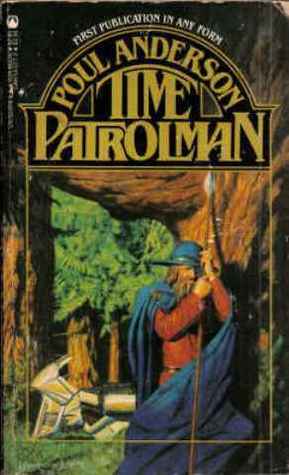
Briefs: The Iron Bridge (Anton Piatigorsky), Limit Vol. 6 (Keiko Suenobu), & Time Patrolman (Poul Anderson)

Anton Piatigorsky's The Iron Bridge dramatizes small incidents from the teenage years of six brutal 20th-century dictators: Idi Amin, Pol Pot, Mao Tse-Tung, Josef Stalin, Rafael Trujillo, and Adolf Hitler. It's--well, I want to call it a "fun" project, is that OK? perhaps the even less descriptive "interesting"? It's also a bit MFA thesis-y, to be honest. Perfectly competent writing, but little fervor (except in Hitler's off-the-cuff diatribes in "Incensed," but he's also the easiest subject, right?), and a certain predictability to the whole endeavor; suffice to say it didn't knock my socks off. Though I may have been spoiled by the genius of Richard Hughes' characterization of Hitler in The Human Predicament.

Limit Vol. 6 (publishes July 23) wraps up the "Mean Girls meets Lord of the Flies manga series I've been devouring since the beginning. I'd worried mid-series that the story would suffer from the marooned girls' discovery that a male classmate survived as well, cause boys ruin everything, but then there was a murder, and paranoia, and red herrings, and I was hooked again. And I found this last volume utterly satisfying and sweet--I may have even shed a few tears.

Time Patrolman came into my life as a Kickstarter reward, from Ad Astra Books and Coffee in Salina, KS. It's really two novellas rather than a single story: the first, "Ivory, Apes, and Peacocks," takes place in 950 BC in the flourishing Phoenician city of Tyre. Manse Everard has come there to investigate a bomb sent from the future by temporal terrorists unknown; as a member of the Time Patrol--an organization formed to protect the integrity of humanity's history--he must track down the perpetrators, in time as well as space, before they carry out their threat to destroy the whole city, with the millenia of repercussions such a catastrophe would create. It's a fun historical/sci-fi detective story, with a great sense of place.

Still, I liked the second tale, "The Sorrows of Odin the Goth," much better--its emotionally engaging characters and immersion in the everyday life of ordinary people insignificant to history remind me of Connie Willis's Oxford time-travel stories. Carl Farness is recruited to the Time Patrol as an academic; formerly a professor of Germanic philology, he wants to track down the truth of events among the fourth-century Ostrogoths that gave rise to legends recorded centuries later. But while there, he falls in love, and when Jorith dies in childbirth, he becomes determined to protect his offspring, born 1500 years before him. His entanglement with his own descendants gets him in trouble, of course, but it's not till the very end that he realizes how great the damage he's done, and the one agonizing choice that remains to him to fix things. Sad, beautiful, and complicated (I mean, the tenses alone!).

(FTC disclaimer: I received free copies of The Iron Bridge and Limit Vol. 6 from Steerforth and Vertical, respectively.)

11 July 2013

The Wooden Shepherdess (Richard Hughes)

Oh, gosh. Guys, can get on making literary necromancy a thing? Because Richard Hughes having the bad luck to die before finishing the projected third volume of The Human Predicament, I think, ranks up there with Gogol's burning the second part of Dead Souls (and then dying himself before he thought better of it) in terms of woefully unfinished masterpieces. The two volumes he published in 1961 (The Fox in the Attic) and 1973 (The Wooden Shepherdess) are already a 20th-century War and Peace, sans theory-of-history digressions and plus a wry wit Tolstoy wouldn't know if it bit him in the beard. It's somehow both epic and intimate, gorgeously written, and Hughes has taught me more about the internal machinations of the Nazi Party, and contemporaneous British parliamentary politics, than history class ever did. (Not to knock my European History teacher at all. Dude was awesome.)

The Fox in the Attic ended with the Munich Putsch, and The Wooden Shepherdess somewhat accelerates the pace, climaxing eleven years later with the Night of the Long Knives (memorably and mythically depicted in Visconti's The Damned). I say "somewhat," because while several months or even years may be dispatched in summary, there are small scenes and set pieces along the way that seem to proceed in real time. The book begins in Prohibition-era America, where the 24-year-old quasi-hero of Attic, Augustine, has ended up after being mugged on a Breton dock and unceremoniously dumped down the hatch of a rum-running boat. Hiding out due to his lack of papers and his illicit means of arrival, he soon finds himself the "elderly mascot" of a pack of hard-drinking, promiscuous, utterly baffling teenagers--"self-sufficient as eagles, unarmored as lambs." This setup leads to perhaps the best literary car chase of all time (I mean, can you think of another one?), and Augustine's deflowering, an encounter he feels a "cold-porridge parody" of his pure love for his Bavarian cousin, Mitzi, whose entry into a Carmelite convent forms another, rather less raucous, thread.

The novel also continues the story of Augustine's sister, Mary, her MP husband, Gilbert, and their daughter, Polly, and adds a new backdrop--the slums of Coventry; at one point Hughes segues between the two brilliantly with "Yes, the ways of the rich man are known to be full of trouble; but even the poor have their cares." And while the rich and poor of Great Britain have their troubles and cares, while Augustine has adventures in Morocco and grows ever more aimless, Hitler slowly continues to climb to absolute power. And not in the background, either--Hughes is totally unafraid to hash out history in narrative, to flesh out real people as characters, to try to figure out not just the how but the why of it, with the chilling hindsight that 30s Europe simply didn't have. An ambitious undertaking, to say the least--but one in which he unambiguously succeeds.
 
Creative Commons License
Muse at Highway Speeds by http://museathighwayspeeds.blogspot.com is licensed under a Creative Commons Attribution-NonCommercial-NoDerivs 3.0 Unported License.