On the last day of May, my husband and I packed up a van with our critters (two cats and a rabbit) and left Brooklyn for my hometown of Wichita, KS. 1400 miles later, we took up temporary residence in my parents' basement, which I'm way more excited about than y'all think (we Perlebergs are a tight-knit, loquacious, loud, weird clan). Five days later, in the wee-est of hours, we boarded the Amtrak's Southwest Chief in the nearby burg of Newton, and went another 600 miles to visit my sister and brother-in-law in Santa Fe, NM. And back, six days later.
What I'm getting at here is: Having traveled roughly 2600 miles in the past two weeks, I have read a LOT of books recently. And I know I'm never going to write them all up individually, but I don't want 'em to go entirely uncommented on, so. Comments!
I started with Jincy Willett's July release, Amy Falls Down, which I loved to pieces--but I'm reviewing it for Wichita's alt-weekly F5, so I'll link to that when it's up.
Basti, Intizar Husain: NYRB Classics sucked me in by describing this as "the great Pakistani novel." And besides, I've only ever read one book translated from Urdu (Naiyer Masud's Snake Catcher). The book follows Zakir through roughly forty years, from pre-Partition British India to the 1971 war that gained Bangladesh (formerly East Pakistan) its independence. There are also dreamlike, surreal flashbacks to the Delhi of 1857, convulsed by the Indian Rebellion (if you're my dad and know Indian history primarily through British eyes, you'll have known it as "the Sepoy Mutiny" until you made Pakistani friends at work and they're like, "Uhhhh, NO"). The narrative shuttles back and forth in time, space, and culture (the references, helpfully compiled in a six-page glossary, derive from Muslim, Hindu, and even Buddhist religious and folk traditions)--it can be difficult to orient oneself, although Pritchett has helped a lot by adding lacunae between sections and ellipses to indicate fantasy/flashback passages. A fascinating read--like all my favorite translated literature, it makes me want to learn the original language so I can read it again.
Once Upon a Tower, Eloisa James: The latest in James's generally brill fairytale series! This one has elements of Rapunzel (obvy). I lurved the hero, Gowan, because he is Tall and a Virgin and SCOTTISH--his height led me to just picture Sam Winchester (IN A KILT OMGGGGGG) the whole way through, endearing him further. Since I was more into him than her--Edie, a talented cellist trapped in an era when women had to play it sidesaddle if they wanted to do so in public--I thought everybody was too hard on him in the third act. YMMV, as they say.
Pigeons, Andrew D. Blechman: You know, I don't miss much about NYC qua NYC--but I sort of love pigeons. To quote myself from Facebook: "they are honestly really pretty birds, and
I think it's cool how well they've adapted to this hyperurban habitat,
such that they're most of the wildlife landscape of the city. Plus,
during mating season, watching the dude pigeons fluff up their feathers
and do their little head-bobbing HEY HEY HEY LADIEZZZZ at the females,
who never look the slightest bit interested . . . free entertainment! So
hilarious." This book, then, was a goodbye-Big-Apple gift to myself. It's very much in the recent tradition of One-Subject Non-Fic (e.g. Mark Kurlansky's Salt or Victoria Finlay's Color: A Natural History of the Palette), and as such is anecdotal. Blechman visits the racing lofts of Brooklyn, the Westminster Kennel Club of pigeons shows in Pennsylvania, gun clubs that indulge in live pigeon shoots, a pair of CRAZY old ladies moseying around Manhattan dumping pounds of birdseed on the ground for city pigeons...great stuff. AND he debunks the "flying disease factory" myth that has maligned the rock dove over the past few decades: yeah, pigeon poop can breed bacteria and fungi in large quantities. But that's sort of the favorite hobby of excrement in general, isn't it? Handling a pigeon won't get you sick. SO THERE.
Red Shift, Alan Garner: THIS BOOK. Guys, I don't even know what to say about this book. It threads through three different times--Roman Britain, the English Civil War, and 1970s England--connected by a place (Mow Cop, a village on the Cheshire/Staffordshire border) and an artifact (a stone axe, 3500 years old, hidden and found between the timelines). But they're also bound by madness, and mysticism, and one of the strangest narrative flows I've ever muddled through. And I don't mean "muddled through" in a bad way, somehow--and when I say "I didn't get it, but I'm not sure there's anything to get," I don't mean there's nothing there, simply that confusion and immersion and a feeling of slipping through consciousnesses that you can't quite get a hold of are absolutely what the reader's supposed to feel. What Garner wants. It's crazy good.
Guarded (Buffy the Vampire Slayer, Season 9, Volume 3), Andrew Chambliss & George Jeanty, Jane Espenson, Drew Z. Greenberg & Karl Moline: Picked this up at Santa Fe's adorbs comics shop, Big Adventure Comics (along with the first issue of Brian K. Vaughan and Fiona Staples' Saga, which I will be reading more of POSTHASTE). I'd previously purchased Volumes 1 & 2 (Freefall and On Your Own respectively), and I've liked this season so far; it's MUCH more grounded than the whee-no-cable-budget insanity into which Season 8 devolved--and, in fact, shows Buffy finally dealing with the fact that she's never become an adult, that despite how well she handles herself with Bad Badness (in the aftermath of magic's banishment, vampires are cut off from their demonic source, and have become feral, indiscriminate butchers), she's terrible with responsibilities like jobs and rent and all the trappings of maturity. Me too, lady, me too. (The second arc features a bait-and-switch storyline that maddeningly shies away from a serious and heartbreaking decision she's faced with--and I totally understand that it was the last straw for some fans--so be forewarned. Me, I'm sort of a helpless Whedon apologist, so I'm willing to press on.)
Back in Wichita now, I'm halfway through Elizabeth Gaskell's 1865 Wives and Daughters. More to come!
14 June 2013

24 May 2013
The Philosophy of Horror (Noel Carroll)
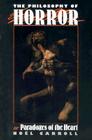 My husband has a degree in film from NYU (go ahead, ask him how useful it is!), so he has a few texts hanging around--including Noel Carroll's fantastic The Philosophy of Horror.
 I haven't indulged in academic writing in a while, which is a roundabout way of saying this isn't general-audience-easy to read: but it's worth the trouble indeed, for anyone interested in the horror genre and by extension the way that fiction works from a philosophical perspective. Carroll spends a lot of time of both the paradox of fiction, i.e., "How can something cause a genuine emotional response in us when we know it's not real?" and the paradox of horror fiction in particular--"Why on earth do we read/watch things that frighten and disgust us?" These chapters (2 and 4) are the most abstruse; Carroll admits in his introduction, "[Chapter Two] is the most technical chapter in the book; those who have no liking for philosophical dialectics may wish to merely skim it, if not skip it altogether." (Isn't it nice when an author gives you permission? I had forgotten my love of said dialectics until I fell back into the comforting style: "X theorizes this. But that doesn't work because of Y and Z...")
Chapters 1 and 3 are the empirical heart of the book, and the ones that will stick with me as I consume artifacts of the genre, and related ones like sci-fi/fantasy--currently, this means that during my daily binge on Supernatural, part of me checks off Carroll's criteria. First, he defines and refines the concept of art-horror (distinguished from feelings of horror elicited by real-world events), and what's required of a "monster" to be an object of this emotion. They must be threatening, obviously, but further, what he calls "impure." The latter term borrows from anthropologist Mary Douglas, who explained the impure as things that fall in between or cross the boundaries of cultural categories, creating contradiction from which we recoil. The easiest example of this is things like ghosts or vampires, who are both living and dead; but Carroll ticks off many other types of transgressive monsters: combinations like werewolves (man/beast) or China Mieville's khepri (woman/scarab); magnifications like the radiation-embiggened critters of 50s sci-fi; the incomplete, crawling hands and eyeballs and formless blobs. He argues persuasively that the fundamental feature of art-horror is cognitive threat; we react to these interstitial creatures with not only fear but revulsion.
And in chapter 3, he analyzes recurring features of horror plots--not denigrating them as formula, but teasing out the way that many stories work, in order to understand how they're satisfying. He characterizes the most common structure as "the complex discovery plot," which consists of four phases: onset (the monster begins to affect the human world, generally by killing people), discovery (the protagonist[s] begin to understand that this threat is unnatural, outside their usual experience), confirmation (often, they must convince an authority of the nature of the threat, overcoming initial resistance to the supernatural explanation), confrontation (what the Winchesters would, constantly and puzzlingly, refer to as "ganking" the monster). Of course, these four phases can be shuffled around and repeated and recombined, and some stories only use two or even one (all onset! all confrontation!). It's an absolutely marvelous theoretical framework, elegant and precise and extremely convincing.
And, you know, a great excuse to read some Joe Hill or watch some horror movies. For research.
22 May 2013
The Amazing Spider-Man, Volume 2 (Stan Lee/Steve Ditko)
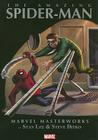 My intermittent attempts to read more of the superhero-comics canon has featured some early Marvel lately. I only lasted a couple of issues into Essential Classic X-Men Volume 1, because SHEESH, Jean Grey, you have massively powerful telekinetic powers, stop putting up with these boys treating you like a rare and delicate flower. (I should read the Claremont run instead, right?)
Thoroughly enjoyed this Spider-Man collection, though, featuring issues 11-19 and Annual No. 1, all from 1964. Honestly, I feel a little silly weighing in on heavyweights like Stan Lee and Steve Ditko, dabbler that I am--but here goes anyway: Lee's writing is sooooo fun here! So blinkin' punchy and breathless, and I downright love the braggadocio of the covers. From #16's, for instance: "Warning! If you don't say this is one of the greatest issues you've ever read, we may never talk to you again!" Hyperbole at its most charming.
And I have actual things to say about Ditko's art! I mean, obviously his human figures aren't naturalistic, and everybody's heads are alarmingly rectangular. But he's great with action and acrobatics, and varies viewing angles and framing distances, so that even conversations have a cinematic sense of movement. And I generally found it easy to follow the direction to take between speech/thought balloons in a panel, not always my strong suit.
Also, who would win in a whining fight: Peter Parker or Luke Skywalker?
16 May 2013
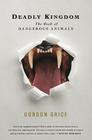
Deadly Kingdom: The Book of Dangerous Animals (Gordon Grice)
 Recently I've been working my way through the non-fiction titles on my TBR shelf, which I often neglect. In very brief: a 60s Catholic title on true and false demonic possession, sadly not as awesome as it sounds; Peter Carlson's followup to K Blows Top, May 28th's Junius and Albert's Adventures in the Confederacy, another winner about two New York reporters shuffled between Confederate prisons before their daring escape across the Applachians; Leonard S. Marcus's winning collection of interviews with picture-book illustrators, Show Me a Story.
And so I came to Gordon Grice's SUPER AWESOME Deadly Kingdom: The Book of Dangerous Animals. As the title implies, it's a compendium of the wide range of animals that are known to kill or injure humans--not just the usual suspects like lions and crocodiles and cobras, but insects that spread disease, domestic dogs that try to better their social standing by biting children, fish that leap out of the water and collide with boaters (one woman suffered a collapsed lung and five broken ribs when a sturgeon hit her), elephants that huck rocks at people (in fact, the elephant kills people in more ways than any other animal, including stomping, goring, swatting with the trunk, even sitting on them on purpose). It's encyclopedic in scope, engagingly written (favorite image: Grice's son's carnivorous water beetle darting around its aquarium "like a frantic pecan"), and a treasure trove of Fun Facts that delight my bloodthirsty inner child. Here are tidbits from all the pages I dog-eared (yeah, maybe it's a bad habit, but it meant I could find these again):
- "[The panda is] best known as the mascot of a certain conservation group and as a sexually reluctant object of human scrutiny in zoos." [25]"
- People often ask me what the most formidable predator in the world is. . . . As it happens, there is a clear answer to this perennial question, and the answer is orca." [89]
- "[The crocodile] can even slow its metabolism so it doesn't starve while waiting to ambush a particular prey item."[133]
- "In Germany, a single crow with the habit of knocking people in the head drew police to a park where, after one or two stratagems failed, they finally got the bird drunk on schnapps and arrested it." [149]
- "It has been said that if England had been as rife with chiggers as the southern United States is, English Romantic poetry might have been avoided." [179]
- "[A]bout sixty [species of millipedes] have repugnatorial glands. (The great regret of my life so far is that I have never had occasion to use that phrase in conversation.)" [182]
- Wondering why it is that butterflies are exempt from the usual insect disgust: "This thought recurs to me every time I see some painted beauty flexing its wings like a slow dream of sunset while it sips at a pile of dog feces." [207]
- Caption beneath a picture of a cutesy-wootsy bunny-wunny-woogums: "Pet rabbits have bitten off human fingers." [272]
(FYI: I read this in hardcover--the book changed publishers and title for the paperback. I like the hc cover better, because GRRRR TEETH, but you'll probably have better luck finding it as The Book of Deadly Animals, with a yellin' hyena.)
30 April 2013
NOS4A2 (Joe Hill)
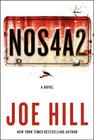 So fair warning, y'all: while reading Joe Hill's 700-page new novel, NOS4A2, which you will do rapidly and with delight, you will end up with Christmas music running through your head. Constantly. And it will FREAK YOU RIGHT THE EFF OUT. William Morrow was wise to publish this in spring rather than closer to the holiday, or they'd be blamed for legions of readers having the Worst Christmas Ever--this way, the memory of Charlie Manx and his 1938 Rolls-Royce Wraith (with its titular license plate) will have blessedly faded.
Charlie's car is a part of him, and he's part of it. Together, they drive down roads no other car can, all the way to Christmasland, "where every morning is Christmas morning and unhappiness is against the law." He's brought children to Christmasland for seven decades--they acquire a great many alarming extra teeth along the way--aided by a series of Renfields like Bing Partridge, who may be a few ants short of a picnic but makes up for it with his father's gas mask and a canister of gingerbread-scented sevoflurane. (Freaked out yet?)
Vic McQueen has her own uncanny vehicle: riding her Raleigh Tuff Burner at top speed, she can travel right over the Shorter Way bridge (despite its having collapsed years ago) to wherever she needs to be to find what she's looking for. One day, she goes looking for trouble, and rides all the way to Charlie, the Wraith, and the house in Colorado where Christmasland overlaps with the outside world.
And we're only 150 pages in.
I'm gonna once again break into my lockbox o' book-review cliches to pull out "tour de force," because ZOUNDS this book is good. (Interesting: a search of this blog finds that I've used the phrase previously to describe Neal Stephenson's Anathem and Dorothy Sayers's Gaudy Night. I think Mr. Hill would be OK with that company.) Hill's writing is deceptively straightforward, sly and propulsive and wise; he writes about so many things, trauma and picture books and parenthood and even Gerard Manley Hopkins and his fanboy crush on author David Mitchell, and the book is equally successful appealing to the heart and intellect as it is the hairs on the back of your neck. (While it didn't scare me quite as much as his debut, Heart-Shaped Box, that's the second scariest book I ever read, after Shirley Jackson's The Haunting of Hill House, so that ain't a criticism.) Read it now, before the radio switches over to non-stop "Little Drummer Boy," six months from now.
23 April 2013
Chess Story (Stefan Zweig)
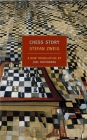 Stefan Zweig's Chess Story is small but intense, made more so by its being the last thing the Austrian Jewish author wrote before his 1942 suicide in exile. The novella nests first-person narrators: in the framing story, a passenger on a steamer heading from New York to Buenos Aires learns he's (a presumptive he, as I don't think Zweig ever specifies) traveling with the world chess champion, Mirko Czentovic, a savant who can barely read but whose rise to the height of the chess world has been meteoric. A group of enthusiasts persuade Mirko to play them simultaneously; they fail spectacularly until they begin taking the advice of a timid stranger. This man reluctantly tells the story of how he gained his chess skills: a Viennese lawyer with ties to the clergy and the imperial court, he was imprisoned by the Nazis after the Anschluss, constantly interrogated in an effort to find the monarchic assets his firm had hidden. The preferred form of torture was total isolation--he's kept for months in a bare room, his only conversations interrogations, until he manages to steal a book from a guard's overcoat. He's disappointed to learn it's only a book of chess problems; but driven by necessity, he works through them over and over, using the checkered counterpane as a board, until he can play chess games entirely in his head, against himself . . . until the psychological task of separating his internal Black player from White overwhelms him, and he goes insane. Pushed into playing against Czentovic, he once again beings to lose his grip on reality.
I found myself comparing Chess Story with Charlotte Perkins Gilman's "The Yellow Wallpaper," another masterpiece of oppression and isolation. They share a sense of claustrophobia and creeping horror that's astonishing in such a short fictional space. And I love how Zweig uses the mental projection required for expertise in chess as both a means of escape and a kind of psychic trap. Zweig was apparently one of the most popular authors in the world in the 1920s and 30s--NYRB Classics has translated several other titles recently, and I'll be reading more for certain.
11 April 2013
The Girl Who Circumnavigated Fairyland in a Ship of Her Own Making & ...Who Fell Beneath Fairyland and Led the Revels There (Catherynne M. Valente)
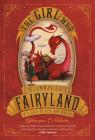 Zounds and wow and holy cow. It is quite possible that Catherynne M. Valente's first two Fairyland books--The Girl Who Circumnavigated Fairyland in a Ship of Her Own Making and The Girl Who Fell Beneath Fairyland and Led the Revels There--are the best middle-grade (i.e. written for eight-to-twelvers) fantasy books I have ever read. Certainly the best published this century: it ranks easily with E. Nesbit and Edward Eager, with the chronicles of Prydain and Narnia, with Alice's Adventures in Wonderland and The Phantom Tollbooth. Its most modern analogues are Dealing with Dragons and The Tale of Despereaux. And it's simultaneously influenced by all of these and utterly original.
 The two books (a third, The Girl Who Soared Above Fairyland and Cut the Moon in Half, is out in October, huzzah!) tell the adventures of September, a little girl from WWII-era Nebraska who's one day Ravished to Fairyland by the Green Wind and his feline steed, the Leopard of Little Breezes. Here is a teeny-weeny handful of the awesome things in these books:
- A wyvern whose father was a library, named A-through-L (he never read the other volumes of the encyclopedia)
- A blue-skinned Marid boy named Saturday, who grants wishes only if you wrestle him into submission
- A sweet-natured soap golem named Lye, whose baths scrub up one's courage and wishes and luck
- A semi-sentient smoking jacket
- Herds of wild velocipedes sweeping across the plains
- Turquoise kangaroos called Järlhopps who mine memories
- A root cellar for world mythology at the bottom of Fairyland, stocked with edibles like Idun's Apple Butter, Kali's Red-Hot Pickled Peppers and Coyote's Extra-Fine Cornmeal Floor
- A narrative barometer with readings like Katabasis, Anabasis, Locked Room Mystery, Treasure Hunt, and Edda
- A sly and compassionate narrator
- And most of all: a heroine who is plucky and brave without being violent
I would quote the whole of both books for you if I could--the writing is consciously Victorian, with lots of Capitalized Nouns, and it's funny and wise and layered, and scary in the right places and in the right ways, and...oof. Just so good. Good to read aloud, good to read as a kid, good to read as an adult. I'll share one passage that my friend Michele (at whose I HAVE TOO MANY BOOKS HELP organizing/giveaway party I obtained my copy of Circumnavigated) underlined, saving me the trouble: "Stories have a way of changing faces. They are unruly things, undisciplined, given to delinquency and the throwing of erasers. This is why we must close them up into thick, solid books, so they cannot get out and cause trouble."
I am jealous of and awestruck by and grateful to Ms. Valente for writing these books, and I want everyone to read them. EVERYONE. For an amuse-bouche of the style and the world, there's a prequel short story you can read online, "The Girl Who Ruled Fairyland--For a Little While." I dare you to read it and not want more.
I am jealous of and awestruck by and grateful to Ms. Valente for writing these books, and I want everyone to read them. EVERYONE. For an amuse-bouche of the style and the world, there's a prequel short story you can read online, "The Girl Who Ruled Fairyland--For a Little While." I dare you to read it and not want more.
Subscribe to:
Posts (Atom)


