All three of these books deserve their own review, because I loved them all; but that's not going to happen for Reasons, so rather than let them slip by unmentioned, I'm giving 'em short shrift here.
The Ruin of a Rogue, Miranda Neville: Miranda's one my faves (I allow myself the presumption of her first name, as we've met briefly in person and exchanged tabby pics on Twitter), and there's more great stuff here, as the titular scoundrel, Marcus Lithgow, woos the wealthy, reserved Anne Brotherton. At first it's a con: he's angling for a payoff from her guardian to remove his unsuitable presence...but when he starts to actually enjoy her company, he finds himself considering the unthinkable: becoming an honest man. Charming, witty, sweet, and hot.
The Luckiest Lady in London, Sherry Thomas: Ms. Thomas can wrench my gut like no one else (with the exception of Joss Whedon), and this one's no exception, although here the queasiness comes more from dark eroticism than pathos. Felix Rivendale, having seen the havoc love wreaked on his parents' marriage, has walled up his heart, plastered over the hollow at his core with perfect politeness. What he feels for Louisa Cantwell--in London for one desperate Season, needing to marry rich to support her family--brings out something fierce and possessive in him. And she finds herself in unwelcome lust at first sight; he makes her want to do things well-bred young ladies do not do, even as she finds his charming facade repugnant. It's messed up, you guys, and it's a testament to Ms. Thomas's awe-inspiring talent that she coaxes an actual love story out of them, and earns a happy ending.
To Charm a Naughty Countess, Theresa Romain: This one's not out till May, but I got an advance copy cause we're besties! (Also, she lent me the previous two books, because my book-buyin' budget is currently nil. Thank you, sweetie.) Her writing just keeps getting better, and her Matchmaker Trilogy for Sourcebooks (of which this is the second) does some unique and important things for the genre. Here, most notably, we have a hero with an anxiety disorder: Michael, the Duke of Wyverne, isn't just shy and awkward, but overwhelmed by crowds, helpless before the niceties of social interaction. He gets headaches, suffers panic attacks, and the heroine, Caroline, can only help, not fix him. Theresa also sets this in 1816, the Year Without a Summer, which seriously needs to show up in novels more often. Good show, m'dear!
ALSO: I've decide to shutter this blog for the time being. I've been writing for five years, and have never been willing to do what's required to build an actual audience; my posts average a couple dozen views, and it's simply not worth the stress. I want to read what I want and then not have it staring at me waiting to be blogged about. I still plan to write the occasional review for F5, and gush about books on my Tumblr. Join me there if you'd like!
28 February 2014

17 February 2014
A Little Bit Wild (Victoria Dahl)
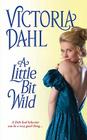 Oh, Ms. Dahl, thank you so much for writing a sexually aggressive heroine.
We meet Marissa York in the process of losing her virginity and finding it...not quite all she'd hoped. In fact, she'd be perfectly content to pretend it never happened were it not for two things: first, the lover in question, Peter White, apparently deflowered her with an eye towards marriage rather than amusement; and second, her brother Edward walks in on them, making what she'd hoped would be a pleasurable encounter into a family crisis. She must marry immediately, Edward declares, in case she's pregnant. But she flat-out refuses to marry Peter: he "failed to meet even the lowest expectations of performance."
Into the breach steps her brother Aidan's friend Jude Bertrand. Natural son of a duke (his mother a French courtesan), he hovers on the edge of noble society, not enough part of it to worry overmuch about scandal, but with just enough respectability to be a proper match for Marissa. Especially since she's caught his eye every time he's visited the Yorks; he's attracted to her wild streak, the wanton liveliness he can glimpse beneath her polite exterior.
Marissa, on the other hand, remembers him not at all. And he's hardly her type, muscular and coarse-featured, where she prefers pretty boys in tight breeches. She's a leg woman through and through: "Men's legs were just so lovely. Slim and strong and exposed in a way that ladies' legs never were. How could they expect that girls should not be affected by the sight? Gentlemen obviously intended to be admired, the way they flashed their thighs about, hardly covered at all in the tight cloth of their trousers." AUGH I LOVE HER SO MUCH.
I don't recall having read a romance heroine who's this outright horny, and it makes for a very different narrative arc: while Marissa quickly realizes Jude's got the goods when it comes to pleasing a lady, it takes her quite a while to see Jude as more than a piece of meat (strong thighs, talented hands, delicious mouth), and he suffers for it. It's a rare treat to read a gal with such a strong libido, and have her be the one who learns to love someone for more than their body. But Dahl doesn't fudge history either: Marissa's initial dalliance wouldn't be a problem in a perfect world, but in 1847 England, it is--not just for her, either. Her actions affect her whole family, and she accepts her responsibility.
Super duper awesome. Also, a Twitter exchange with the author led to some choice Jensen Ackles gifs, so there's that too.
15 February 2014
Eleanor and Park (Rainbow Rowell)
 Eleanor and Park is yet another example of a book party to which I'm too late for a substantive review. I mean, it came out a year ago, and every young-adult-reading-adult I know who's read it has RAVED, quite rightly. And if you, dear reader, are a YA-reading-adult, you've already heard of it. And I've nothing new to add to the accolades: it's wonderful. Beautifully written, heartbreaking, heart-lifting, yes-this-is-exactly-what-it's-like-falling-in-love-ing.
What I have instead of a review, then, is a question, one that makes me wish I'd done more blog promotion and whatnot so that I had an actual community of commenting readers, because I am likely just asking to the ether: Why is this a young adult novel?
Genre, and delineations thereof, are tricky--especially those based on the assumed age of the audience. And the YA Crossover phenomenon is well-documented: Twilight, The Hunger Games, The Book Thief, and so forth. Indeed, these days some "young adult" titles are picked up by publishers specifically to become crossovers. I don't think Eleanor and Park is one of the latter, and it falls under the vague general definition of YA in that the main characters are teenagers. But to me, speaking only to myself, it feels like a retrospective adult novel--that the third-person voice is that of an older person looking back on first love and adolescent trauma, not that of a teenager experiencing it firsthand. This isn't an insult, or even a quibble: I loved this book, I'm so sad I have to give it back to the library at the end of the month. I just want someone to sit me down and explain. Please?
13 February 2014
Something More Than Night (Ian Tregillis)
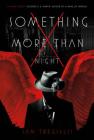 Raved about this one over at F5. I'm pretty sure this is the first time I've ever used "sublime" in a book review.
09 February 2014
Pieces of Sky (Kaki Warner)
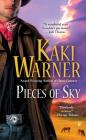 I really thought I'd enjoy Pieces of Sky. It came recommended: heck, it won the RITA for Best First Book the year it came out! Warner's writing is lovely, especially her descriptions, and the setting (New Mexico Territory in 1869) is the good kind of unusual; but while I did finish it; I ultimately couldn't like it.
I should've listened to my gut and put this aside on page 8, when I found out that the heroine, Jessica Thornton, was pregnant after being raped by her brother-in-law. Her situation is certainly unique among the romances I've read, and could be properly dealt with--after all, rape victims obviously deserve happy endings and loving relationships. But, augh, Warner comes sooooo close to writing a hero (New Mexico Territory rancher Brady Wilkins) who provides Jessica with the patience and gentleness and lack of judgment she needs...and then, less than a year after the attack, he gets mad at her when she tenses up at the prospect of sex, because he's been nothing but kind to her. DUDE. YOU DO NOT GET TO DECIDE WHEN SHE'S READY, AND KINDNESS WILL NOT FIX TRAUMA. They do eventually sleep together, of course, after she decides he's right, and OH LOOK AT THAT SHE'S FINE NOW. Gross.
Brady also has a streak of bloodthirstiness to him that's unsettling. There's a whole revenge plot wherein Sancho Ramirez, the madman responsible for Brady's father's death--the culmination of a long-standing feud begun when the RosaRoja ranch, originally owned by the Spanish-descended Ramirez family, was given to Jacob Wilkins after the Mexican War. Sancho is cartoonishly, over-the-top evil: he sets fire to things! he fantasizes about raping his sister! And while the usual revenge narrative goes something like "character wants revenge, character gets revenge, character discovers revenge is kinda hollow," here Brady gets revenge and the narrative is essentially "WOO-HOO GREAT JOB BUDDY" while he leaves Sancho's corpse to rot where he fell.
So, yeah. Despite glimmers of promise--I like that Brady has a mustache, and that he's actually got legit reasons for being super buff, unlike the usual "duke who's never done manual labor has a six-pack" trope--I couldn't embrace the hero as a character. And without that, there's just no fulfillment to the romance.
05 February 2014
Bet Me (Jennifer Crusie)
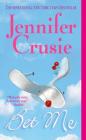 Been meaning to read Bet Me for years: it's one of Smart Bitch Sarah Wendell's veryvery favorites ("not having read this book is in violation of many international treaties"), and former colleague Bookavore provided the VITAL information that it features a donut makeout scene, which should just be on the cover, right? Somehow, despite that last fact, I didn't figure out it was a farce until the last scene--so I kept thinking "I love this, but I don't buy it" until light dawned. So I'm telling you up front: go into it as farce! Let silly bits slide! Because oh, it is so rewarding.
Min(erva) Dobbs is a zaftig actuary, just dumped by the odious David (srsly, he's the worst)--she's hanging out at a bar with her BFFs, drowning her sorrows and fretting about fitting into her maid of honor's dress at her sister's wedding three weeks hence. Enter Calvin Morrissey, commitment-shy and the hottest thing on four wheels (YES I CAST JENSEN ACKLES IN MY HEAD I'M SORRY IT'S A SICKNESS), who never loses a bet. And David (the WORST) tries to bet him ten grand that he can't sleep with Min in a month. Cal, who is not a horrifying misogynist asshole, refuses outright--but he does wager $10 that he can take her out to dinner that night. They go on the grumpiest first date ever, as Min has no patience with Cal's practiced charm--and she also believes he agreed to David's first (WORST) bet.
Despite their both feeling utterly incompatible, the two find themselves stuck in the same circles, and keep finding themselves on more and more serious dates. She's got massive body image issues courtesy of her awful mother, and he's all "Whatevs, you're hot, allow me to hand-feed you carbs." And he's got an awful family too, and she sticks up for him, and AUGH there's just so much else here, there's a cat, and snow globes, and her sister's wedding, and parallel relationships, and Little League, and Cal's terrible ex Cynthie...it's all marvelously plotted, the dialogue is witty, and the way these two people learn to see themselves through each other's accepting eyes is the BEST. Fun but not inconsequential, frothy without being shallow, Bet Me is indeed a romance must-read.
03 February 2014
Ella Enchanted (Gail Carson Levine)
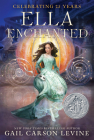 Gail Carson Levine's Ella Enchanted, like Karen Cushman's The Midwife's Apprentice, came out when I was in high school--tragic, as seven or eight years earlier both books would've become all-time childhood favorites.
I cut my teeth on fairy tales, and have since been a sucker for retellings of all kinds: Ella is a riff on "Cinderella," but such a sly and oblique one, half the fun is coming across the bits you remember and smiling at how Levine makes them new.
She starts off borrowing a scene from "Sleeping Beauty,": the infant Ella receives a fairy blessing. This particular fairy, Lucinda, has a regrettable knack for idealized "blessings" that are practical "curses," and poor Ella is no exception--she is ensorcelled (awesome, I'm so happy I get to use that word) to be always obedient. Sounds lovely, right? She'll grow up well-behaved and pleasant. Or, helpless before an order from anyone, she'll grow up with no control over her life, in constant danger--tell her to kill the king? She'd have to do it. As she gets older, she learns to delay her obedience a bit, but it's physically painful; Ella would give anything to have the spell undone.
After her mother dies, her distant father ships her off to finishing school, where she gets high marks, of course, having no choice but to obey the teachers' orders perfectly. But when she learns that Lucinda may be at a giant's wedding across the kingdom (fairies love celebrations), she sets off on a perilous journey into ogre territory.
There's more, of course: wicked stepsisters, a fairy godmother, glass slippers, and a budding friendship with Prince Charmont--but as I said, following the familiar tale through Levine's clever twists makes the book just delightful. Plus, plucky heroine! And subtle commentary on the subordinate role of women, too, without being the slightest bit didactic. Oh, for a time machine to pack with books and bring to my little-girl self...
Subscribe to:
Posts (Atom)


