Showing posts with label TBR January. Show all posts

03 February 2014

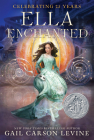
Ella Enchanted (Gail Carson Levine)

Gail Carson Levine's Ella Enchanted, like Karen Cushman's The Midwife's Apprentice, came out when I was in high school--tragic, as seven or eight years earlier both books would've become all-time childhood favorites.

I cut my teeth on fairy tales, and have since been a sucker for retellings of all kinds: Ella is a riff on "Cinderella," but such a sly and oblique one, half the fun is coming across the bits you remember and smiling at how Levine makes them new.

She starts off borrowing a scene from "Sleeping Beauty,": the infant Ella receives a fairy blessing. This particular fairy, Lucinda, has a regrettable knack for idealized "blessings" that are practical "curses," and poor Ella is no exception--she is ensorcelled (awesome, I'm so happy I get to use that word) to be always obedient. Sounds lovely, right? She'll grow up well-behaved and pleasant. Or, helpless before an order from anyone, she'll grow up with no control over her life, in constant danger--tell her to kill the king? She'd have to do it. As she gets older, she learns to delay her obedience a bit, but it's physically painful; Ella would give anything to have the spell undone.

After her mother dies, her distant father ships her off to finishing school, where she gets high marks, of course, having no choice but to obey the teachers' orders perfectly. But when she learns that Lucinda may be at a giant's wedding across the kingdom (fairies love celebrations), she sets off on a perilous journey into ogre territory.

There's more, of course: wicked stepsisters, a fairy godmother, glass slippers, and a budding friendship with Prince Charmont--but as I said, following the familiar tale through Levine's clever twists makes the book just delightful. Plus, plucky heroine! And subtle commentary on the subordinate role of women, too, without being the slightest bit didactic. Oh, for a time machine to pack with books and bring to my little-girl self...

29 January 2014

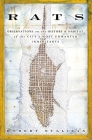
Rats (Robert Sullivan)

Many moons ago, I paired up Rats with Andrew Blechman's Pigeons as a Goodbye-New-York-City gift to myself, for obvious reasons. Yes, I wasn't only the weirdo who said "Hey buddy, how's it going?" to pigeons on the street, I always squeaked with joy at rats on the subway tracks or scurrying along the platform: "Good job, little guy! I'm proud of you!"

I am perversely proud of the rat, for turning human civilization to its advantage, spreading with agriculture across the globe, finding a niche in cities filled with garbage--and becoming the most common mammal in the world. They've got a fearlessness and adaptability I admire (and envy). And yes, I think they're cute, even their lil naked tails.

So integrated is the rat into urban life that it's rarely considered in naturalistic terms--there was no Planet Earth segment on the NYC rat, for instance. Sullivan, however, decides to approach them this way, observing them in their unnatural natural habitat: a single alley on the Lower East Side, which he watches over four seasons' worth of nights (broken by the cataclysm of 9/11). He's a great tour guide, with an infectious enthusiasm and a willingness to go off on tangents, burrowing ratlike into all the corners of his story--anywhere there's a tasty morsel of information.

Interspersed with his surveillance, then, are wide-ranging chapters on the relationship of rats to man and specifically to cities; he talks to exterminators both private and public (yes, NYC has a city department dedicated to pest control), delves into the biography of 19th-century rat-fight entrepreneur Kit Burns, details the arrival of bubonic plague (carried by the rat flea) in the U.S. The latter's an astonishing tale--the first victims showed up in San Francisco's Chinatown in March 1900, and a charming mix of racism and business interests covered it up, mayor and governor alike denying that anyone had ever been diagnosed, ruining the career of the doctor who'd made the discovery. And that's why plague is endemic to New Mexico today.

Also, FYI, I just this minute noticed there's a rat on the cover.

26 January 2014

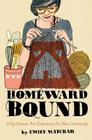
Homeward Bound (Emily Matchar)

Homeward Bound hit my TBR courtesy of my friend Alana Chernila, food blogger at Eating From the Ground Up, author of The Homemade Pantry--in other words, a committed member of one of the many related subcultures Matchar talks about in this book. I, too, have been embracing domestic tasks of late, cooking from scratch, keeping house, knitting and mending; partly because my bundle of chronic illnesses makes it difficult for me to maintain a steady work schedule, but also because I enjoy the role of "housewife" in my partnership (though I prefer the term châtelaine, because I'm also the designated spouse to deal with The Man, i.e. insurance companies, banks, government offices).

And I feel really, really guilty about this, about my contentment with staying home, about my utter lack of ambition regarding a career. Sure, I love books, and I love writing, but I don't want to manage or own a bookstore, and it seems foolhardy to believe I could support myself through writing alone. I'm college-educated, though, upper-middle-class, feminist--so aren't I wasting my life and my talents being a homemaker? Aren't I letting my husband down as an equal partner, since he's the one who has to work to support us? (I'll admit, I feel less guilty since I was diagnosed with fibromyalgia, a compelling medical reason not to work too hard. Or at least less rationally guilty.)

So Matchar's book, which observes and critiques various aspects of the phenomenon I find myself part of, i.e. educated women choosing not to work outside the home and/or immersing themselves in traditional "women's work," appealed to me immediately., and my friend Molly (an associate editor at Simon & Schuster) hooked me up with a copy. Matchar terms this phenomenon "the New Domesticity," defining it as "the re-embrace of home and hearth by those who have the means to reject those things." That last clause is super important, of course, cause if you're a Colonial woman who sews all her family's clothes because there's no such thing as store-bought garments, well, you're far less likely to enjoy it. Whereas I dropped $60 on merino/alpaca yarn to make myself a sweater, and it's a delightful leisure activity.

Matchar begins with a historical overview of American domesticity, starting with that toiling Colonial gal; crediting the Industrial Revolution with the establishment of "work" as something one left the house to do, which necessitated the parallel sphere of homemaking; the enshrinement of women as spiritual and moral keepers of the home (see Virginia Woolf's Angel in the House, and see also Mallory Ortberg's "Virginia Woolf: Angel Hunter," because it's hilarious); the rise of convenience foods and automation in the mid-19th-century, which had the side effect of giving housewives less to do--and she argues cogently that this unstructured free time led to boredom which led to rebellion which led to second-wave feminism. (I simply cannot back her play when she keeps insisting said feminism didn't help devalue women's work. I can agree that some of the blame should fall on economic factors, some on the fact that women's work was never really valued in the first place--but stay-at-home moms and non-working women are still regularly vilified or at the very least viewed dubiously by some of the very feminist scholars she cites in the book, and by comment sections everywhere. Otherwise I wouldn't feel so darn guilty about not working!)

She then examines different threads of the New Domestic movement, with chapters on lifestyle bloggers, Etsy/craft culture, the DIY food movement, attachment parenthood, rejection of mainstream corporate culture, and homesteading, and it's all fascinating. I love the mix of skepticism and envy that comes through when she talks about these women's lives, and I love that she talks about the strange overlap of left- and right-wing that happens in many of these subcultures. And I extra extra especially love that she draws conclusions, and comes up with some potential lessons that acknowledge the good she finds in the movement while suggesting ways in which it could improve, without yelling at anybody. Seriously, when was the last time you read an opinionated non-fiction book that did that?
21 January 2014

Do Androids Dream of Electric Sheep? (Philip K. Dick)

So I've been staring at this page for nearly an hour, trying to think of a new way to say that one of the most acclaimed sci-fi novels of the 20th century is, in fact, realreal good, and you know what? I don't have one. Do Androids Dream of Electric Sheep? is realreal good, you guys,and I read it in a day, and it doesn't have nearly as much in common with Blade Runner as I thought. It's post-apocalyptic, for one thing, and there are indeed electric sheep--and goats and cats and spiders and owls. And household mood-inducing machines, responsible for a quote Dick stole from my day planner: "'My schedule for today lists a six-hour self-accusatory depression.'" YUP. EVERY DAY.

Thanks for picking this up off the street in Brooklyn, Chris! You're the best!

19 January 2014

Narrative of Arthur Gordon Pym of Nantucket (Edgar Allan Poe)

Total coincidence that I'm writing this on Poe's birthday--it's not much of a present, since I thought his only novel, Narrative of Arthur Gordon Pym of Nantucket, was no great shakes. So, uh, happy 205th, dude! I didn't like your novel!

But while I didn't enjoy it, I can appreciate its influence. The first chunk, wherein our narrator stows away on his BFF's dad's ship--only to find himself trapped below decks by a mutiny--is super Melville-y; or rather, some of Melville's work (esp Benito Cereno) turns out to be super Pym-y, right down to the uncomfortable-making racist bits. Who knew, right?

The middle chunk, wherein the last four survivors on the ship face the horrors of storm and salvation, is really the only part that feels like Poe to me, good and gory. When they're finally rescued, however, they embark on a journey to the South Pole (yes, really)--and then unfolds a precursor to the Weird Voyage tale (borrowing a phrase from Ann & Jeff Vandermeer's awesome anthology The Weird): strange animals, strange plants, strange people. Even the water changes nature. I've read a bazillion of these, short stories and novels both (see, for instance, M.P. Shiel's The Purple Cloud), and thus Pym suffers the fate of being read after its descendants, lessening its impact. This happens when you read ALL THE THINGS, unfortunately.

18 January 2014

Inverted World (Christopher Priest)

Christopher Priest's 1974 sci-fi dystopia, Inverted World, is itself an inverted novel, taking a fairly standard "coming of age in a weird world" narrative and twisting it. But you'll have to take my word for it--not only will I not spoil it for you, I don't have the physics chops to explain the revelations anyway. (I should send this to my brother, he'd love it.)

I can tell you the setup, though: Helward Mann, at the age of "six hundred and fifty miles," joins the Future Surveyor guild of the city of Earth, like his father before him. During his apprenticeship, he works with members of all the guilds that keep the city functioning--and moving, because the entire municipality creeps along on rails, taken up behind and put back down before, and has done so since its creation. The necessary laborers are hired from the dirt-poor villages along its route; the city also borrows women, who gain a temporarily comfortable life in exchange for bearing a child. The secret of why it does so--why it must do so--is unknown to the ordinary citizens, preserved by the guilds under oath. When Helward's charged with taking a trio of village women back home south of the city--a direction mysteriously known as "down past"--he's initiated into the true, bizarre situation of the city, and the peril that faces its inhabitants.

But Priest doesn't stop there. After establishing the parameters of Helward's world, he deftly undercuts them in the book's third section. Argh, I'm sorry to be so vague, but the fun's in the journey, quite literally--hopping on the train-city (which inevitably makes me think of China Miéville's Iron Council and Railsea--this novel must be an influence), seeing where it goes, and what happens when it stops.

(FTC disclaimer: I received a free copy of this book from NYRB Classics, in exchange for an honest review.)

11 January 2014

Speedboat (Renata Adler)

This book, you guys. THIS BOOK.

Renata Adler's Speedboat is all voice--a novel without a narrative, plot, or climax. And yet, though one could certainly apply the dread epithet "experimental," it's easy to read. Fun, even!

It's "about" (as far as that goes) Jen Fain,  a young female reporter living in New York City in the 70s. She teaches sometimes, she goes to Elaine's, she has a few casual romantic entanglements, she hangs out with artist types; and she tells us about them in a succession of anecdotes, rarely more than a page long, sometimes just a few sentences. It's too disjointed to be stream-of-consciousness--puddles-of-consciousness perhaps? And not so much a character study, because Jen studies the people around her with sardonic wit (sardonic witty ladies are my favorite!), keeping herself at bay. Somehow, though, these discrete episodes build on each other, not cresting to an epiphany, but documenting a setting, internal and external, in all its small dysfunctions and quiet victories.

And Speedboat is full of what are, frankly, perfect sentences. Like the very last one: "It could be that the sort of sentence one wants right here is the kind that runs, and laughs, and slides, and stops right on a dime." Yes, that is exactly the kind of sentence one wants, holy crap.

P.S. I've decided to give my reading some structure this year by adopting different themes every month, like I've previously done with Romance February or Newbery November. I'm starting off simple with TBR January--the goal being to get through all the books waiting on my shelf that have been there since before I moved to Wichita. Last June.

(FTC disclaimer: I received a free copy of this book from NYRB Classics, in exchange for an honest review.)
 
Creative Commons License
Muse at Highway Speeds by http://museathighwayspeeds.blogspot.com is licensed under a Creative Commons Attribution-NonCommercial-NoDerivs 3.0 Unported License.