20 May 2012

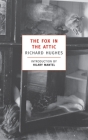
The Fox in the Attic (Richard Hughes)

Richard Hughes envisioned The Fox in the Attic as part one of a planned trilogy, or rather one book printed in three volumes, to be called The Human Predicament. The work, Tolstoyan in scope, would follow the Welsh and Bavarian branches of a family (with associated servants, friends, and historical figures) from the aftermath of the Great War to the verge of WWII. His composition was so slow as to make George R.R. Martin look like James Patterson, however, with Fox in the Attic published in 1961 and its follow-up, The Wooden Shepherdess, twelve years later (1973); when he died in 1976, only 50 pages of the final volume had been completed. (NYRB Classics includes these chapters in their edition of Wooden Shepherdess.) Does Hughes's unrealized ambition hurt Fox in the Attic as a stand-alone novel? Ehn, I didn't think so. True, there are some extraneous characters who probably gain importance later, some undeveloped subplots . . . but this is also a novel adept and epic enough to slip into the POVs of everyone from a five-year-old girl to Adolf Hitler without missing a beat, and my awe at that ability more than carried me through the rough patches.

Our Pierre-ish hero is Augustine, an aristocrat born with the century, barely too young to fight in the Great War--one of thousands of young men across Europe who expected to die in the trenches and were marooned by the Armistice with sixty more years to fill. He hasn't found much to occupy them, and he lives alone in an inherited manor, rattling about with his naive and grandiose ideas, convinced that mankind has been reborn from the cataclysm of WWI, that a new, peaceful, godless era is upon Europe. When he finds a little girl drowned on his property, the gossips of the nearby village are convinced (for no good reason) he had something to do with the death, and his older sister convinces him to spend some time on holiday with distant relatives in their Bavarian castle. There, he falls madly in love with blind, pious Mitzi, and remains utterly oblivious to the dark and dangerous politics of 1923 Germany.

The Fox in the Attic is several kinds of story. First, a bildungsroman centered with affectionate mockery on Augustine, who's constantly shocked at the world's incongruity with his worldview, though somehow unshaken in his utopian beliefs. I just wanted to pat him on the head and slap him by turns. Second, a family saga with characters galore: Augustine's brother-in-law Gilbert, a Liberal MP; Gilbert's young daughter Polly; medieval-tragic Mitzi; her monarchist father Walther; her militaristic uncle Otto, all wholly individual and conveniently microcosmic. It's also a historico-political novel of astonishing skill--apparently Hughes dug up primary sources previously unknown, and I learned a lot about the postwar upheaval of Weimar Germany--struggles between fascists, socialists, monarchists, Nazis, republicans, with runaway inflation to oppress them all. Augustine's philosophizing, tested in discussion with other idle intellectuals, make this a novel of ideas, though the ideas are as muddled as those who espouse them--there's a wonderful line about Augustine's drunkenly arguing Art with a Brazilian sculptor who has the advantage of him due to "something always essential for absolute clarity of thought: he had read almost everything which agreed with his theories and nothing whatever that didn't, whereas Augustine's notions were merely an unorganized ten-year deposit from many conflicting sources." I think this happens to me on a regular basis.

And of course, any book that spends time in the feverish brain of Hitler, in hiding after the beerhall putsch in Munich (itself a masterful scene), can be partially classed as a horror novel. The portrait of the up-and-coming Fuhrer is both eerily intimate and well-observed from without--this early in his career, few knew what to make of this weird, low-class little man, prone to violent harangues at dinner parties--and too few took him seriously.

If Fox in the Attic has a dominant theme, I think it's miscommunication. None of these people, fictional or real, makes any effort to listen to or understand each other as independent consciousnesses (to get slightly Hegelian for a second . . . or at least my ten-year deposit of memories of same). One scene in particular highlights this for me: Augustine, full of paternalistic passion for Mitzi, finds her praying in the family chapel and walks her back to the main house through a heavy snowfall--but he does this by hovering silently just beside her, hand floating at her waist but without making any contact. In his head, they form a profound spiritual connection; she, on the other hand, has no idea he's there. And from the attic, a malign presence watches, with a third interpretation as wrong as the others. Only we the readers see the whole picture, with the benefit of time and distance.

16 May 2012

Gaudy Night (Dorothy Sayers)

So this review was going to start with a rant about how Dorothy Sayers's tour de force Gaudy Night was out of print and what is WRONG with people, but I've learned that Harper is reissuing it in October with a swank new cover, which has simmered me back down. This is a book which should not be lost: partly because it contains a crucial chunk of her twenty-year Lord Peter Wimsey narrative, in the form of the BEST PROPOSAL EVER (fictional division, of course; don't get het up there, Andersen). Still more vital, it portrays the lives and travails of educated women in the first decades of the twentieth century, from their own perspectives--an experience that must not be forgotten. I hesitate to call it the first feminist detective novel, not being an expert on either category, but it is certainly early, and important.

If you're not familiar with Lord Peter Wimsey, you are in for a treat come October. The short version is: Bertie Wooster but fiercely bright, and a detective. With a monocle! As charming a character as he is, though, he appears in Gaudy Night for maybe a tenth of its pages--and detecting proper takes up maybe a fourth. Most of the book centers on Harriet Vane, a mystery writer Peter saved from the gallows when she was accused of murdering her lover in Strong Poison. He fell madly in love with her, and had been proposing to her on a regular basis--and being refused--for years since. He does nothing so unpleasant as stalk, never fear, merely sending a polite letter every month or so; she continues to demur not from antipathy, but from resentment over being indebted to him for her life, and an unwillingness to award herself as recompense for said debt.

The book takes place in 1935, as Harriet returns to Shrewsbury College, Oxford, for her class reunion, dubbed the "Gaudy." After a weekend of friendships rekindled (and regretfully outgrown) with former classmates and dons alike, she's drawn back to the city of dreaming spires by a pleading letter from the Dean, who knows her dabbling in detection and needs discreet help. There's been a rash of nasty happenings on Shrewsbury campus: poison-pen letters, obscene drawings, vandalism, including a bonfire of students' gowns in the quad and the wanton destruction of Miss Ludgate's long-in-the-making manuscript on her new theory of prosody. The culprit seems bitterly hostile towards unmarried academic women, branding them as harpies and man-eaters . . . and timing and circumstances point to one of Shrewsbury's own.

So why not call in the police, or at least alert the highers-up at Oxford? Well, the very nature of the pranks--their pointedness at the collegiate woman--begs for as little publicity as possible. Women were only granted the right to receive degrees from Oxford in 1920 (Sayers, like Harriet, was one of the first women to do so), and they're still regarded as at best unusual and at worst unnatural. Harriet fumes when the gown-burning incident is reported by a London paper as an "Undergraduettes' Rag" investigated by the "Lady Head":
Women, of course, were always news. Harriet wrote a tart letter to the paper, pointing out that either "undergraduate" or "woman student" would be seemlier English than "undergraduette," and that the correct method of describing Dr. Baring was "the Warden." The only result of this was to provoke a correspondence headed "Lady Undergrads," and a reference to "sweet girl-graduates."
This sort of sniggering is exactly why Shrewsbury's academics want an investigation on the quiet. And while Harriet protests she's hardly a professional, she's happy to oblige by moving back onto campus, ostensibly to research a biography of Gothic writer Sheridan Le Fanu. And she's fallen back in love with the intellectual life, after years away in unlucky love and literary society. In between incidents with Shrewsbury's mad prankster, Sayers luxuriates in conversation, between smart and opinionated women, about who they are, who they could be, what society demands of them and what it should. It's wonderful to read, both as artifact and as sad testimony to what hasn't changed.

For a mystery novel, Gaudy Night seems to have little at stake--no murder, no theft of material property (beyond those academic gowns, weighty with their symbolic value). But what's threatened is far more precious: the right of women to pursue the examined life, to find paths other than marriage and family. Though Harriet finally accepts Peter's suit at novel's end, it's from a realization that he does, indeed, view her as an equal, a mind to rival his own. His successful proposal demonstrates this--he addresses her not only in Latin, but in a snippet from an Oxonian degree-granting ceremony, calling her magistra, literally, a woman with a master's degree. It's, uhm, really, really romantic. Almost as romantic as having my attention distracted from a book of Onion sports reporting to be proposed to in front of my whole family on Christmas morning . . .

15 May 2012

Railsea (China Miéville)

You know, Voltaire famously mocked Leibniz for calling this "the best of all possible worlds." But this is the third spring in a row there's been a new China Miéville novel--Kraken in 2009, Embassytown last year, now Railsea--so HEY VOLTAIRE YOU LOOK PRETTY STUPID. High five, GWL!

So many wonderful things are afoot in Railsea. Part Moby-Dick, part Robert Louis Stevenson, part Miéville's own Iron Council . . . and perhaps most wonderfully, it's a young adult novel (like his previous Alice in Wonderland-y Un Lun Dun) which dials down the body horror and apocalyptic shadings of his adult work without sacrificing depth of writing at all, trusting that, yes, teenagers (and sensitive adults--hi Mom!) can indeed deal with complex sentences (instead of only using commas, even when they're wrong), fourth-wall breaking narrative structure, and ten-pound words like "eruchthonous."

He defines the latter as "that which digs up from underneath & emerges." It's a vital word for the setting he creates, that of the railsea: an endless, twisting system of train tracks that make up the known world. Between lies the dangerous earth, rife with burrowing, carnivorous creatures, beetles and burrowing owls and blood rabbits--and the great southern moldywarpe, a mole as big as an engine. Young Shamus Yes ap Soorap is a doctor's aide on a moletrain, which pursues these behemoths for their meat, fat, and fur--and one mole in particular, Mocker-Jack, nemesis of his one-armed captain, Abacat Naphi.

This storyline--not the only one by any means!--is both awestruck homage to Melville and a sly, loving send-up of same. Since, like any right-thinking individual, my favorite M-D chapter is "The Whiteness of the Whale," how I giggled at Naphi's insistence that the mole is not simply yellow, but "[o]ld-tooth coloured. . . . [T]he hue of ancient parchment. Ivory-reminiscent. Lymphlike. A white stained like the old eyes of frantically ruminating scholars." And he has similar twinkle-in-the-eye fun with academia's incessant analysis of the Great White Whale and its meaning. Most moler captains have a "philosophy," a given animal which they pursue as both beast and symbol, "a principle of knowing or unknowing, humility, enlightenment, obsession, modernity, nostalgia or something." So we have "Captain Genn's Ferret of Unrequitedness; Zhorbal & the Too-Much-Knowledge Mole Rats," Captain Vajpaz's greatstoat as an avatar of speed and acceleration . . . and Naphi, whose prey "hate[s] to be parsed"--he is the "Mole of Many Meanings. . . . Mocker-Jack means everything."

And that's more or less the B plot! Sham himself is mostly uninterested in Naphi's quest; he doesn't care to be a moler at all, wishing he could hunt salvage, the bits and bobs and mysterious circuitry of the innumerable wrecks spread out over the railsea. In the debris of one of these he finds a camera's memory card that ends on an impossible photograph: a single track. The end of the world. His own search for this unknown and unimaginable place is full of danger and epiphany.

Augh, there's so much more I want to mention. His use of the ampersand, which not only makes the pages look all baroque and lovely but serves as visual reminder of how "the lines of the railsea go everywhere but from one place straight to another. It is always switchback, junction, coils around & over our own train-trails." His occasional break from the story to address Story itself, the extended metaphor of "[e]very rail demand[ing] consideration of every other, & all the branches onto which that other rail might switch." This line, which I am seriously considering as a tattoo: "Our minds we salvage from history's rubbish, & they are machines to make chaos into story."

And for my money, it's a sign of true talent for a gritty, dark writer to also convincingly write cuteness. In Un Lun Dun, an animate milk carton named Curdle was the protagonist's loyal and adorable pet; here, Sham adopts a daybat, named Daybe in a moment of on-the-spot panic, who is just the cutie-wutiest wittle critter.

And oh! There's a "landfall shanty" called "We're Going to Get Unbelievably Drunk (in a Pub)." And cultures and religions and animals only glimpsed . . .

12 May 2012

Now You're One of Us (Asa Nonami)

I realized, while writing up In the Woods, the peril of reviewing mysteries: for me, the effectiveness of these stories depends on their gradual, methodical nature. I.e., the (good) mystery is a mechanism, the function of which is unknown at first--my enjoyment comes during the process of watching smoothly fitted gears turn, sudden switches flip, hidden panels open . . . and finally feeling the pieces click into place. It's deeply satisfying to some piece of my problem-solving brain.

But since I want to preserve that experience for other readers, I end up having little to say. Premise. Other thing I liked. It's good! (Or, it's not.) And I suppose, if you know me, and/or trust my taste, that's enough. I'm not sure whether it's really reviewing.

So let's call this less a review than an endorsement, namely of Asa Nonami's supremely creepy tale of familial horror, Now You're One of Us. That wonderfully unsettling cover taunted me across the room for months back when our D&D nights took place at Vertical's offices--and this is a case wherein judging a book by its cover is a smart decision. That single personal hair on the soap perfectly encapsulates the domestic disquiet in the story of Noriko, who marries into the wealthy Shito family and moves into their compound, where four generations of just the nicest people live in perfect harmony.

Except, OK, maybe her sister-in-law is a little old to be bathing with her developmentally disabled teenage brother. And if Great-Granny can't walk, what was she doing in the hallway in the middle of the night? And why on earth are there hallucinogenic plants in the front garden?

At this point I run into the peril and have to say WHY INDEED? But I must say, despite the common trope of the bride surrounded by a new family who are not what they seem, Nonami's take is unique, especially the ending. And her sense of menace, aided by dispassionate and slowly paced prose, is top-notch. It's a fun, eerie little novel.

08 May 2012

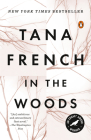
In the Woods (Tana French)

Confession: my primary reason for instituting Mystery May was as an excuse to read more Tana French--I'd enjoyed Faithful Place in 2010, and wanted more. So I started at the very beginning, as per Julie Andrews, with the multiple-award-winning In the Woods.

Had not quite realized how her books fit together (the two mentioned above, with The Likeness in between; Broken Harbor comes out in July); they're a series chronologically, all related to the fictitious Dublin Murder Squad, but each has a different first-person narrator. Cool, right? Here, it's Detective Rob Ryan. Born Adam, he's abandoned the name in an effort to shuck the notoriety he earned as a twelve-year-old after his two best friends disappeared from the woods where the three often played, near their suburb of Knocknaree. He was discovered with his shoes dyed black and stiff with blood, parallel tears in the back of his T-shirt--and no memory whatsoever of what had happened. There has been no trace of the others, living or dead, since.

Twenty years later, Ryan and his partner, Cassie Maddox, are assigned to a murder in the same woods; twelve-year-old Katy Devlin has been bludgeoned and then carefully laid out an a stone altar at a nearby archaeological dig. Two tiny pieces of forensic evidence--a girl's hair clip and a drop of blood--seem to link it to the old case. Ryan knows he should stay away from this case, for the very same reasons he can't leave it behind. It's a recipe for bad decisions, and he makes an irreparable one.

Tormented detectives are a dime a dozen (or, this being an Irish novel, ten-a-penny, or ooh! Let's go with "bog-standard"). But what sets ItW apart is the depth of character. French is astonishingly adept at writing both Ryan's inner and outer lives: his frustration at not being able to remember the most important day of his life, his tiny, resurfacing memories of the moments he spent with Jamie and Peter, and especially the well-observed dialogue between him and Maddox, the easy rhythms and constant teasing of close friendship.

Loved this book. Can't wait to read the rest.

02 May 2012

Kitty Cornered (Bob Tarte)

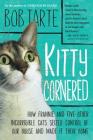
When I picked up a book with that wild-eyed feline on the cover and the title Kitty Cornered: How Frannie and Five Other Incorrigible Cats Seized Control of Our House and Made It Their Home, I was fully prepared for adorableness and shenanigans. While Bob Tarte's memoir has those in spades, it's also sweet, funny, poignant, and best of all, strewn with bits of absolutely lovely prose.

For instance, he describes "that oddly unhurried but determined feline [run]: erect body, stiffly trailing tail, legs flickering like the frames of a silent movie." Or how Frannie (a frightened stray who makes her way from their yard to their porch to their house--a familiar vector) "was white with mostly black hind legs that made her look as if she were wearing a pair of tights that were falling down." And when she looks at him, "her face fleetingly resembled a dozen different animals: a flying fox bat, weasel, bush baby, panther, lemur, spotted gecko, Our Gang star Carl "Alfalfa" Switzer, and obscure creatures I didn't recognize. I have seen all these beasts in kitties I've known (well, not "Alfalfa"); I've also known them to look like a kangaroo, crème brûlée, a Holstein calf, a harried maître d', even a snake, peeking out from under a blanket so all you see is pointy nose and half-open yellow eyes.

Tarte is unabashedly anthropomorphic, and often hilarious, as he chronicles the adventures of his and wife Linda's eventual six cats: Agnes, perpetrators of daily attempts on his life on the basement stairs; elderly Moobie, who requires her water dish held off the floor for her delectation; Lucy, described as "very affectionate!" by the friend they adopted her from, but who turns out to be a "continent of crabbiness" who Tarte makes it his life's mission to befriend; goofy, chubby Maynard, who came to them as Mabel and whose craving for attention is equally only by his ability to wail nonstop when not receiving such; Tina, another stray who becomes Maynard's much-needed BFF, the bane of their bathroom wallpaper, and Frannie's nemesis; and Frannie, Tarte's soul mate in anxiety. I cheered her every step toward domesticity, and shed a tear at a setback or two. (NOTE TO MY SISTER: No kitties die in this book! Don't worry!)

I know a lot of cat people, and a lot of book people. All you in the overlap in that Venn diagram? You should all read this one. (My copy is going in the mail as a Mother's Day gift!)

5/5: UPDATE for you visual learners--pictures of the cat cast! Miss Frannie is a Benny-type cat as I suspected.

01 May 2012

Store of the Worlds (Robert Sheckley)

The easiest way to sum up Robert Sheckley's short stories (selected here by Jonathan Lethem and Alex Abramovich as Store of the Worlds) is that they read like episodes of the classic black-and-white Twilight Zone. I.e., they share a wry humor, a concern with the social issues of their day (the 1950s to early 60s, although Sheckley kept writing until his death in 2005), and great gotcha moments on which they pivot. Even though you see them coming, they're still delightful--and often not quite the twist you expect.

So this collection is as comfortable, funny, and enjoyable as those New Year's Eve marathons of TZ on . . . ugh, it's "SyFy" now, isn't it? Favorites of mine: "Protection," in which an alien guardian angel proves more trouble than it's worth; "Double Indemnity," a tale of time-travel insurance fraud; "The Language of Love," where a man studies for years to be able to express precisely how he feels about a girl, only to discover he's just fond of her; "Shape," about an attempted invasion of Earth by a rigidly stratified alien society, with a sweet ending that made me tear up a little. Kudos as per usual to NYRB Classics for reprinting these gems from the heyday of the science-fiction mag!
 
Creative Commons License
Muse at Highway Speeds by http://museathighwayspeeds.blogspot.com is licensed under a Creative Commons Attribution-NonCommercial-NoDerivs 3.0 Unported License.